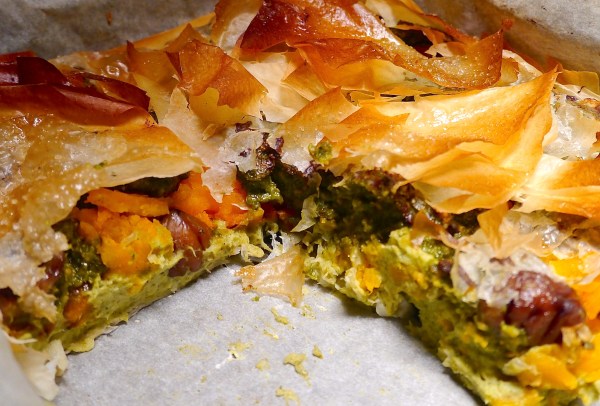
Should I avoid carbs in the evening?

Some of us try to avoid carbohydrates in the evening, in the hope that it will help us lose weight. We’re told that we’re going to sleep soon, so anything we eat later in the day will just be stored as fat. If we want to eat carbohydrates, then we should eat them earlier, for breakfast, when we are going to burn them off.

Is this true?

The body doesn’t really work like that. If you eat more than you need on any given day, it will be stored as fat, whether it’s carbs you’ve eaten, or fat or even protein. Consume more calories than you’re burning and your body will store it. And it will store it as fat, even if you eat it all at breakfast.

Basically, your body works on physics. It’s a ‘closed system’ and the energy that goes in (food and drink) will be either stored as mass (fat or muscle) or burned as energy (either metabolic processes or exercise).

If you are training hard, are eating a set number of calories and have all of your ‘macros’ down pat (ie the proportions of fat, protein and carbs), then the timing of the carbs might make a small difference. But lets face it, very few of us are doing that.

What matters most to our bodies is calories. Clearly, a more nutrient-dense option is going to be better for our health (brown bread over white). However, if you really want carbs in the evening, then going without is probably going to lead to overeating later.

I really enjoy carbs in the evening. They help the brain release Serotonin, which is a relaxant and anti-depressant. They help me sleep. And I like a bigger meal then. It suits me and if it’s your preference too, then there is no reason not to have it.

What does suit you? Do you like carbs at night?
The Potato: 19 lumps of sugar or superfood?

This appeared in the British media a few days ago:
“The nation’s obesity crisis is partly being fuelled by the seemingly harmless potato.
Scientists have found a single baked spud contains the equivalent of 19 lumps of sugar.”
 
Five years ago, in the same press:
“Ignored by dieters because they are ‘fattening’, few would class the potato as a ‘wonder food’ packed full of vitamins, minerals and nutrients.
But the spud is actually better for the body than traditional superfoods – such as bananas, broccoli, beetroot, nuts and avocado, a study has found.
The researchers said people are wrong to shun it in favour of modern and more expensive alternatives.”
 
No wonder we are all confused about what to eat…
 
So what are the facts?
 
Potatoes are high in fibre (more than five times the amount in a banana), vitamin C (more than in an orange) and Selenium, an important mineral for immune health. There is also some evidence that they may lower blood pressure.
 
However, they have a high glycemic load, which means that the energy in them (carbohydrates) is released quickly, which leads to a spike in insulin. This isn’t great for weight management, as it can set off a roller coaster of sugar and insulin. Eating protein with the potato would minimise this effect.
 
Sweet potatoes have a much lower glycemic load, and are possibly a choice that is easier on the body. Although that isn’t going to help if you really fancy a potato: baked, mashed, boiled or in a salad.
 
A potato is neither going to kill us or rescue our health. It’s just a potato.

What are you hungry for?

What are you hungry for? Are you hungry at all?

Perhaps you’re not hungry, but neither are you satisfied with what you’ve eaten – you ate a salad when you wanted something hot and filling, believing that the salad would be ‘better for you’. And instead, all you want to do is eat more.

Perhaps you are scared of feeling hungry, and don’t dare let yourself feel it? In case the hunger is so great that you eat everything in sight…

Or is it sugar craving driving you, not hunger at all? A roller coaster ride of insulin and glucose: sedated on carbs one minute and desperate for another fix the next.

Maybe you’re actually hungry for recognition, or a new job, or a bit of encouragement. But that isn’t forthcoming, so a biscuit will have to do.

It can be worthwhile to sit for a moment, and to allow quietness to settle into your limbs, so that you can ask your stomach, your heart, your being: what am I hungry for?

And then give yourself permission to have it.

Should I eat breakfast? Intermittent fasting versus metabolism kick start…

I was asked this week ‘Should I eat breakfast?’

For a long while, the received wisdom has been: Breakfast like a king, lunch like a prince and dine like a pauper. Or as the Russian saying goes: Eat your breakfast alone, lunch with a friend but give your dinner to your enemy…

Breakfast was promised to get your metabolism going and keep you focused for the morning.

Then along came intermittent fasting, and we’re being advised to wait as long as possible before eating, ideally 16 hours after our meal the night before. By doing this, we benefit from some of the processes that kick in once our bodies haven’t eaten for a while: these processes clean out suspect cells which keeps cancer, Alzheimers and other diseases at bay.

So which is true? Are either of them?

Firstly, your metabolism will get going whether you have breakfast or not – your body needs to function, and function it will. If you’re used to having breakfast, you might need to get used to eat later, but it’ll be hunger pangs that strike you, not a metabolic catastrophe.

As to whether breakfast is a good idea or not, it seems that nothing is true for everyone. Even the most compelling studies show a distribution of results. Some things work for some people, and not for others. Our genetics, our microbiome and our environments are all so different that how these things affect us is entirely individual.

If you are ravenous when you wake up, then it would be advisable to have breakfast. Otherwise, you’ll end up in the cookie jar before the day has even started. If, on the other hand, you’re not hungry, then why would you eat? Why not wait until hunger pangs start, and if that’s not until late in the morning, and you can wait until lunch, perhaps you’re one of the people for whom intermittent fasting will work.

If you’ve had a large breakfast, you might be the type of person who isn’t so bothered about dinner, and if you will want to try fasting for 16 hours, then it might suit you better to do it at the end of the day.

There are no rules – have a try and see what suits you.

How to get over the fear of feeling hungry

For a long while I was scared of feeling hungry.

“I’ll just have a snack now in case the meeting runs late.” “I’ll eat something to get me through the school run”. “I’m going out to dinner, and I don’t want to get hungry, so I’ll eat something now”

In fact, there was a time when I was so scared of feeling hungry that I hadn’t felt hungry for years. I never let myself get to that point.

At the very first sign that I might get a hunger pang, I’d tuck into something. At the thought that I hadn’t eaten for a few hours, I’d open a packet. If I began to realise that there may be a gap between meals – I’d ensure there wasn’t.

And it has taken me a long time to get over that fear.

A review of the (more honest) comments of Hollywood actresses, reveals that many of them admit to feeling hungry all the time. This is the only way they can maintain their abnormally thin frames. Feeling hungry all the time is very draining and exhausting.

But that is very different to feeling hungry for half an hour.

It is absolutely worth letting yourself feel hungry. When you eat, the food tastes better. There is a real sense of the body refuelling. It’s a true sign that you need to eat.

But first of all you need to know what hunger feels like, and that may take a while.

Why you still fancy one last diet…

You do, don’t you? Just one last time. And THEN, after that, you’ll address the other things.

When I was in thrall to food, I wrote in my journal:

Another binge… three weeks now. What stops me from eating normally is:

  • Guilt from over eating in the last three weeks
  • Terror at the weight I must have put on
  • A feeling of helplessness and hopelessness that I’ll ever lose it
  • A consequent hatred of my body
  • Disgust and despair at myself

Overeating acts both to blott out those feelings and to punish myself. If I felt attractive and glamorous and interesting, I wouldn’t feel like bingeing.

The terror of the weight, and the terror that my life might be one long endless binge without the constrains of a diet, kept me locked into diets. And diets were the very thing preventing me from being thin.

But the lure, the promise that they make is almost irresistible. There are endless before and after photos, lists of science or pseudo-science that back up the claim.

And if only you could lose those kilograms/pounds, that everything would be alright. Wouldn’t it?

The basics of weight loss for life

The basics to weight loss and weight management are really very simple:

You get hungry

You decide what you’d really like to eat

You enjoy your food, savouring every mouthful

You stop eating when you are no longer hungry

Repeat until death

But somehow we seem to have made this incredible simple process very difficult.  Over the years we are told what to eat, when to eat, where to eat, until you eat when you are told, not when you are hungry, you eat what is prescribed or ‘allowed’ not what you’d really like to, and as for stopping?  Isn’t is when the plate is empty?  Or when the serving bowl is empty?  Or worst of all, when the fridge is empty of all its temptations….?

Hmmm, there were many years when I actually thought I had been born without the stop button.

Listening to what we are told, rather than our bodies, means that we over-ride our natural mechanisms for hunger and satiety.  We no longer recognize when we need to eat (or when we don’t) and we no longer recognize when we should stop eating.  This means we eat long past the point of fullness.  It means we eat when our bodies are not hungry or ready for food.  It means we eat when we already have sufficient energy to live so it means what we eat is laid down as fat.

Eating in tune with your body is a very satisfying thing.  Your body does not want to be overweight, or heavy.  It wants to be lean and energetic.  This is how it was made to be.  But years of over-feeding, starving, fast food, Christmas and Thanksgiving and diets have beaten it into submission.  Now it just opens its mouth and digests whatever you next put into it.

But if you start listening to it again, it will actually talk to you.  It will tell you when it is hungry and when it is not.  It will tell you when it needs some red meat for iron or when it craves the vitamin C in citrus.

But I want it now!!

It will have taken you many years to create the body that you are currently living in.  Realistically, it will take months or years to create a new body and a new way of living.  I know, I know, you want the results NOW.  Well, that then leads back to those diets that are restrictive, make you feel deprived (see the post on Dieting) and that you end up breaking…. And usually putting on more weight than you lost.

So here is a different method.  It does not involve pain, deprivation or doing anything that you don’t want to do.  You get to decide.  You get to eat your favourite foods.  You don’t have to feel hungry.  You can set your own pace.  You can still eat out with friends.  Yes, you can still eat chocolate.  In fact, there is a blog post coming devoted to just that!

Weight loss – is it really so difficult?

Weight loss is a complex and difficult task.  It is made more so by the current waves of diets that sweep the market.  This blog is an alternative to those diets and methodologies.  It takes the best from each and allows every one of us to work out for ourselves what we like to eat, when we like to eat and how to work with our bodies to lose weight.

All of us want to be slim and attractive.  We all want to look our best.  But not many of us want to go the rest of our lives without eating birthday cake.  And even fewer of us really look forward to weeks of dieting, and existing on tasteless and unsatisfying meals that leave us hungry and irritable.

The simple idea here is if you engage in a program that actually suits you, and that doesn’t force you to eat foods that you don’t like at times when you’re not hungry, well, there is no reason why you couldn’t do it forever.  And that means that the weight stays off for good.

If you can lose weight while still eating chocolate, then losing weight doesn’t seem so punishing.  And if you can keep the kilos off for good, that’s even better.

Blog at WordPress.com.

Up ↑